
Preparing for an IGCSE Maths exam can feel challenging when students are unsure about the type of questions they may face. Reading notes and practising textbook exercises are important, but IGCSE Maths Past Papers can take exam preparation a step further.
Past papers allow students to practise questions in a real exam-style format. They can help you understand how questions are presented, improve time management, identify weak topics, and become more comfortable with solving problems under exam conditions.
However, simply completing one paper after another is not enough. The real benefit comes from knowing how to use past papers correctly and how to learn from mistakes.
In this guide, you will learn how to use IGCSE Maths past papers effectively and turn your practice into a structured revision strategy.
Table of Contents
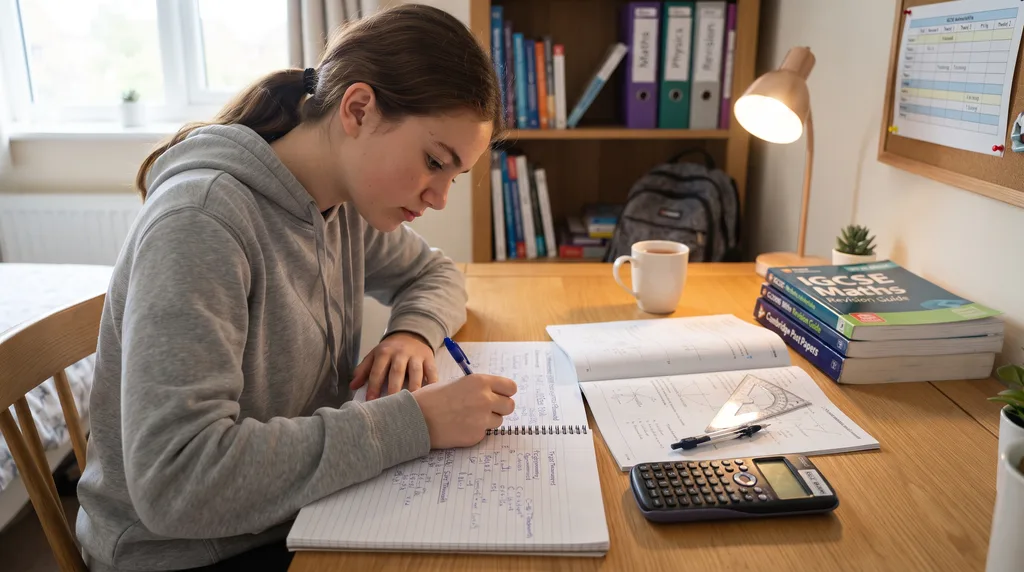
What Are IGCSE Maths Past Papers?
IGCSE Maths Past Papers are previous examination papers that students can use for exam practice and revision.
They contain questions designed around the skills and topics assessed in the relevant IGCSE Mathematics syllabus. Working through these papers gives students an opportunity to practise applying mathematical concepts rather than simply reading about them.
Past papers can be used at different stages of preparation.
For example, a student who has just completed a topic such as algebra can practise questions related to that topic. Later, the student can move towards complete papers and attempt them under timed conditions.
It is important to check the correct syllabus and paper format before starting. Older papers can still provide useful practice, but students should make sure the content they practise is relevant to their current course.
if you found any query about IGCSE Chemistry Past Papers click here
Why Are IGCSE Maths Past Papers Important?
1. They Familiarise You With Exam Questions
Knowing a mathematical formula is different from knowing how to apply it in an examination.
Past papers expose students to different question styles and help them understand how mathematical problems can be presented.
With regular practice, unfamiliar questions can become easier to approach.
2. They Help Identify Weak Topics
A past paper can show you more than your total score.
Suppose you consistently make mistakes in:
- Algebra
- Geometry
- Trigonometry
- Graphs
- Probability
- Statistics
These patterns can help you identify areas that need more revision.
Instead of spending equal time on every topic, you can focus more attention on your weaker areas.
3. They Improve Time Management
Time management is an important part of exam preparation.
Some students understand the mathematics but spend too much time on individual questions.
Practising under timed conditions helps you learn how to divide your time and move on when a question is taking too long.
4. They Improve Problem-Solving Skills
IGCSE Maths is not only about remembering formulas.
Students often need to understand information, select an appropriate method, perform calculations, and present their answers correctly.
Past papers provide regular opportunities to practise these skills.
5. They Build Exam Confidence
The first timed paper can feel difficult.
After completing several papers and reviewing mistakes, students usually become more familiar with the exam process.
Confidence comes from preparation. The goal is not simply to complete a large number of papers, but to learn something from each one.
How to Use IGCSE Maths Past Papers Effectively
Using past papers strategically can make revision much more productive.
Step 1: Check Your Syllabus
Before practising, make sure the paper matches the syllabus you are studying.
Do not randomly download papers without checking the syllabus code, paper type, and relevant examination period.
Step 2: Start With Topic-Based Practice
If you are still learning the syllabus, you do not need to begin with a complete timed paper.
Start with questions from topics you have already studied.
For example:
Learn the topic → Practise questions → Check mistakes → Revise → Move to mixed questions
This approach helps build understanding before full-paper practice.
Step 3: Move to Complete Papers
Once you have covered most of the syllabus, begin attempting complete papers.
Try to reproduce the examination environment as closely as possible.
Keep your desk clear, follow the permitted equipment rules, and set a timer.
Step 4: Mark Your Paper Honestly
After completing the paper, use the relevant mark scheme.
Do not change your answer simply because you think you might lose marks.
Your goal is to discover what you genuinely know and what still needs improvement.
Step 5: Analyse Every Mistake
This is one of the most important steps.
For every incorrect answer, ask:
- Did I misunderstand the question?
- Did I use the wrong formula?
- Did I make a calculation error?
- Did I skip an important step?
- Did I misread the information?
- Did I run out of time?
- Did I fail to show enough working?
Write these mistakes in an error log.
Step 6: Repeat After Revision
Do not immediately repeat the same paper just to get a higher score.
First revise the weak areas.
Then attempt another paper and check whether the same mistakes appear again.
Look at Your Working
In mathematics, reaching the correct final answer is not always the only important part.
Your working can show how you approached the problem.
If you received fewer marks than expected, find out which step caused the problem.
Understand Method Marks
Some questions involve multiple steps.
If your final answer is incorrect, do not immediately assume that everything was wrong.
Check whether part of your method was correct and where the error occurred.
Create an Error Log
A simple error log can look like this:
| Question | Topic | Mistake | Correct Approach |
|---|---|---|---|
| Q4 | Algebra | Sign error | Check negative signs |
| Q8 | Geometry | Wrong formula | Revise area formula |
| Q12 | Trigonometry | Calculator error | Check calculator mode |
| Q18 | Probability | Misread question | Identify required outcome |
After several papers, this log can reveal patterns in your mistakes.
How to Find the Right IGCSE Maths Past Papers
Students should use reliable sources when looking for examination papers.
For Cambridge IGCSE Mathematics, check the correct syllabus before downloading papers. Cambridge provides official past papers and related resources, but older papers may not always reflect the current syllabus.
You should also check whether you are studying Cambridge IGCSE Mathematics 0580 or another mathematics syllabus because different Cambridge Mathematics syllabuses use different assessment structures.
When selecting a paper, check:
- Syllabus code
- Examination year
- Examination session
- Paper/component
- Core or Extended route, where applicable
- Current syllabus relevance
- Mark scheme
- Examiner report, when available
Using the correct paper prevents you from spending valuable revision time on material that does not match your course.
Common Mistakes Students Should Avoid
Doing Past Papers Too Early
If you have not learned the necessary topics yet, a full paper can become frustrating.
Build your understanding first and then increase your past-paper practice.
Practising Without a Timer
Untimed practice is useful at the beginning.
However, students should eventually practise under timed conditions so they can improve their exam speed.
Looking at Answers Too Quickly
If you immediately check the solution whenever a question looks difficult, you lose the opportunity to develop problem-solving skills.
Give yourself enough time to think before checking the mark scheme.
Ignoring Mistakes
Completing ten papers without analysing mistakes may be less useful than completing fewer papers and carefully reviewing every error.
Your mistakes tell you what to revise next.
Memorising Past Papers
The purpose of past papers is not to memorise questions.
The same question may not appear in your examination.
Instead, learn the mathematical concept and practise applying it in different situations.
Using Only Easy Questions
Students sometimes practise questions they already understand because it feels comfortable.
Good revision should also challenge your weaker areas.
Use difficult questions as an opportunity to identify what needs improvement.
A Simple Past Paper Revision Plan
You can adjust this plan according to your exam date and current preparation level.
Week 1: Topic Practice
Focus on weaker topics.
Complete selected questions from relevant past papers.
Record mistakes in your error log.
Week 2: Mixed Practice
Start combining different topics.
Try questions without immediately checking the answers.
Review your mistakes after each practice session.
Week 3: Timed Papers
Begin completing full papers under timed conditions.
After each paper, calculate your score and analyse your errors.
Do not focus only on the number.
Ask yourself why you lost marks.
Week 4: Targeted Revision
Use your error log to identify repeated problems.
Revise those topics and practise similar questions.
Then complete another timed paper to check your progress.
Tips for Students and Parents
For Students
Create a regular revision routine rather than trying to complete many papers in one day.
Keep your past papers, mark schemes, notes, and error log together.
Most importantly, do not become discouraged by mistakes. A mistake during practice can show you exactly what to work on before the real examination.
For Parents
Parents can support students by helping them maintain a consistent study routine.
Instead of focusing only on marks, ask:
- Which topics are difficult?
- What mistakes are happening repeatedly?
- Is the student improving with practice?
- Is enough time being given to weak areas?
The purpose of revision is progress, not simply completing a certain number of papers.
Frequently Asked Questions
Where can I find IGCSE Maths Past Papers?
For Cambridge IGCSE Mathematics, students should start with the official Cambridge International resources and make sure they select the correct syllabus and paper.
How many IGCSE Maths Past Papers should I practise?
There is no single number that works for every student. The quality of practice matters more than simply counting papers. Complete enough papers to understand your weaknesses, improve timing, and become comfortable with different question styles.
Should I use the mark scheme after every paper?
Yes. Reviewing the mark scheme is an important part of past-paper practice. Do not only check your final score. Analyse where and why you lost marks.
Should I complete past papers under timed conditions?
Yes, especially as your examination approaches. Topic-based and untimed practice can be useful earlier, while timed full papers help you practise exam management.
Are older IGCSE Maths past papers still useful?
They can be useful for practising mathematical skills, but always check whether the topics and paper format match your current syllabus.
What should I do if I keep getting the same questions wrong?
Stop and identify the underlying topic or skill causing the problem. Review that topic, practise simpler questions first, and then return to exam-style questions. Keeping an error log can make repeated weaknesses easier to identify.
Conclusion
IGCSE Maths Past Papers are much more than a way to test yourself before an examination. When used correctly, they can help you understand question styles, improve time management, identify weak topics, develop problem-solving skills, and become more confident.